Insights

Sevan CO2 Terminal
What if smaller CO2 emitters could join the CCS value chain without building their own terminal and infrastructure?
Most of the carbon capture headlines relate to large emitters in a point-to point value chain where the captured CO₂ from one emitter will be delivered to a specific storage facility. These are volume justifying dedicated infrastructure; terminals, CO₂ tankers and pipelines. However, the majority of the emitters are small scale, spread across hundreds of mid-sized plants, each too small to carry the cost of its own export infrastructure alone. For those emitters, capturing technology is rarely the hard part. Getting the CO₂ from the plant gate to a storage site is.
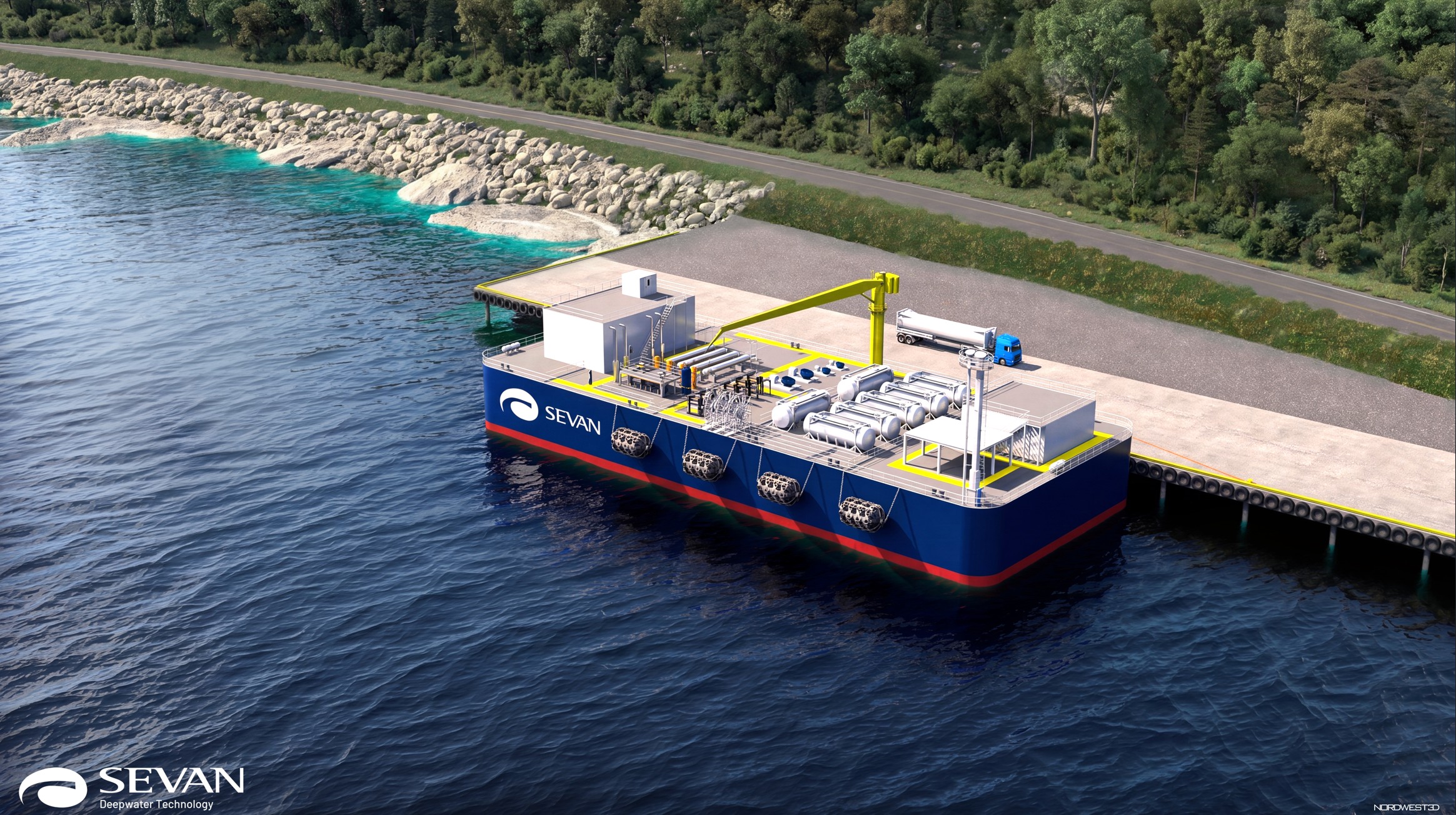
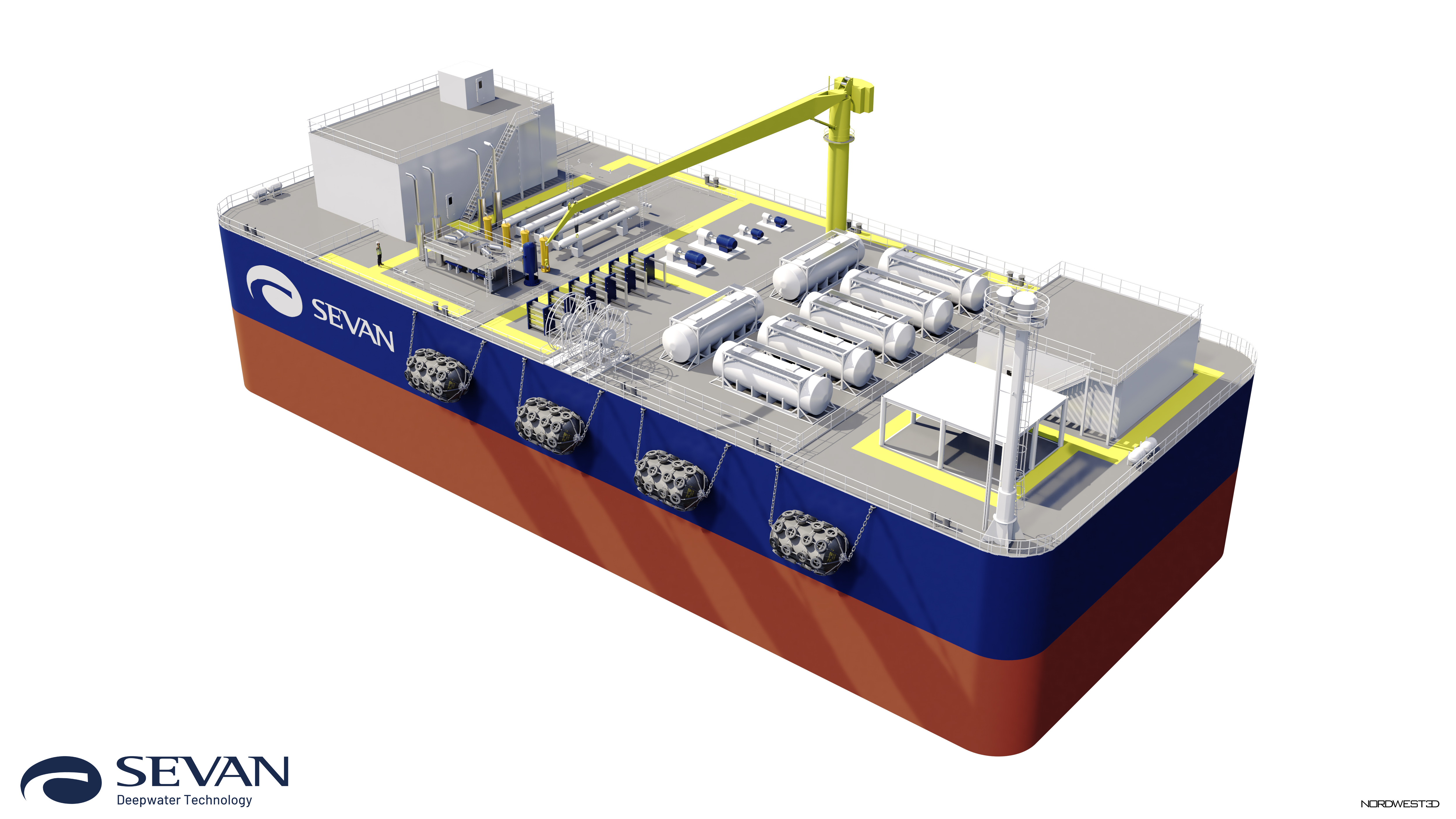
That's the gap the Sevan CO₂ Terminal is addressing; a floating terminal that aggregates CO₂ from multiple onshore sources, conditions it to delivery spec, and transfers it ship-to-ship for transportation to permanent offshore storage.
In the basic version of Sevan CO₂ Terminal, CO₂ arrives in standard ISO T50 containers by road or rail, is lifted aboard by the deck crane, and stored in below-deck tanks. The terminal is permanently moored and runs on shore power. Containerized CO₂ is already moved this way every day in the industrial gas market, by road and rail, with existing equipment.
Instead of every emitter funding its own quay, tank hub and export facility, several share one floating terminal. That changes the economics from a series of standalone projects into a shared utility, and it lowers the barrier for exactly the mid-sized plants currently left outside the chain.
Furthermore, by adding a conditioning unit, the CO₂ can be treated to meet CO₂ specifications required for delivery in a future liquid CO₂ market where the capture is disconnected from a specific storage facility.
The floating Sevan CO₂ terminal also changes how the assets get built. The complete terminal can be modularized and constructed at an existing yard and towed to location, which limits the need for complex marine and civil operations at the quay. The construction phase is also relieved from local stick building, lengthy permitting processes, and reduces localization discussions.
Capture capacity is growing faster than the infrastructure to move it. Shared, floating, yard-built terminals are one way to close that gap.
Latest insights